Search This Blog

Showing posts with label Presence. Show all posts

Wednesday, October 6, 2010

You Never Know


There's that moment when the blur comes into focus.  There's the instant all the noise in your head quiets.  There's the proverbial switch that gets flipped - the light bulb goes on.

Isn't it interesting (but not necessarily worthwhile) to look back at a time when you were so sure of how something in your life was going to go and realize now just how wrong you were.  You thought you'd be with her (or him) forever.  You thought you found what it was that you wanted to do for the rest of your life.    You thought this was going to be the last job you ever had.  You were certain that if you just did A, B, and C that X, Y, and Z would follow.  We often trot out the phrase, "you never know," only to eschew our own advice when we want to believe something.  We want it to be as we believe it will be so badly that we forget that it never is, can never be.

In May of 1996 I'd just finished my master's degree in education.  After the graduation ceremony and celebratory meal, I finished loading all of my worldly possessions into the small U-Haul trailer hitched to my 1991 Toyota Corolla.  I was moving to Portland, Maine.  This is where I thought my life would unfold.  My girlfriend was from Maine and had an exciting job at a successful advertising agency near the Old Port.  We rented an apartment in a cool old building on the Western Promenade.  We got a cat.

At 25 years of age, I felt sure I was on a course toward adulthood.  I could see it in my mind's eye.  I got on well with my girlfriend's parents and siblings.  They had a nice farmhouse not far from the city and a four season condo in Bridgton.  We played tennis, swam in the lake, went for hikes and skied in the winter.  My girlfriend's mom was an enthusiastic and talented cook.  When we'd go over to their house for Sunday dinners, the smell of tomatoes, garlic and onions made my knees buckle in epicurious anticipation.  Before the food touched my tongue, I could already taste it.  I could taste it as surely as I thought I could see my future in my crystal ball.

As I envisioned it, my girlfriend and I would get engaged, marry, have children.  We'd go to Acadia and Mt. Katahdin.  Having already spent a Christmas with their family, I could imagine all of us, with our spouses and children, sitting around the tree, drinking hot cocoa spiked with peppermint schnapps.  They were a musical family.  Their father would cajole the kids into trotting out their high school instruments to play carols.  And my family adored my girlfriend as well. When she came to our Passover celebration with her winsome smile and good humor she charmed the room. 

I knew, too, that I'd be a great teacher - the one the kids would love, respect, and admire.  They'd hang on my every wise word, laugh at my every witticism, and come to me for sage advice.  With my teaching career already determined, I thought I'd find time to write that great American novel on the side.  My girlfriend was a young star at her agency; she'd already been assigned to big clients, been shipped to Chile for work.  There wasn't much that wasn't right in our world.  Until the day there wasn't anything that was right.

I spent the summer of 1996 in Portland reveling in a future already clear in my mind.  We decorated our Western Promenade apartment and went on weekend excursions.  I saw these as steps toward a certain path.  I worked that summer giving guided bus tours of Portland and used my free time to send out scores of applications to area high schools.  It was just a matter of time, I knew, before all the pieces fell into place.  It was just a matter of time.

June soon became July and August came just as swiftly.  But along with late summer's humidity, a certain coolness could be felt at 48 Western Promenade.  There was a new curtness in my girlfriend's voice that portended ill-fortunes.  I hoped against hope that it would be short-lived, that it was a phase.  It wasn't long, however, before I had to ask,  "What's going on?"  

I could see the anguish in her eyes.  She had something to say that she knew would hurt me.  She knew it would be painful, just as it was painful for her to have come to the realization.  She unburdened her conscience, released a torrent of pent up feelings.  She cared for me, but....there was no other way to say it, she didn't want us to remain together.  It hurt.  I didn't feel betrayed; she hadn't betrayed me, she had only remained true to herself.  As much as it stung, I could not fault her for listening to her conscience.  When we moved in together, she felt sure it was what she wanted; it simply wasn't how she felt now.  

I wept on my pillow and felt the pain of our breakup.  But as much as I felt sadness over our breakup, I know much of it had more to do with the loss of the life I had so vividly anticipated.  All of it was gone in that instant.  All that never was could never be.  The image frames in my mind melted away like celluloid too close to the hot projector lamp.  The door to that future didn't just close, it evaporated completely, like a horrible magic trick.

*     *     *     *     *

The next weekend I picked up a Sunday Boston Globe help wanted section (In the mid 1990s it was still possible to find a job in an actual newspaper).  I hadn't even glanced at any opportunities outside of Maine before then.  Why would I have?  There was an ad for English teachers on Cape Cod.  Having spent weeks and summers there, I began the application process.  I submitted my credentials.  Unlike the lack of response I'd had from a single school in Maine, I got a call the very next week to come in for an interview.

I showed up, answered the questions of the department head and was soon thereafter led into the principal's office for an impromptu interview with him.  Afterward I was asked to wait in the outer office while they conferred.  The department head came out, sat down, and said, "I've only ever done this once before in my career, but I'd like to make you an offer today."  I accepted.

In the span of two weeks, the life I'd mapped out in Maine had gone from a foregone conclusion to a painful memory.  I'd exchanged my apartment overlooking the Fore River for a basement hovel opposite a boat yard next to Lewis Bay in Hyannis.  From my dark and dank apartment, I could hear the Nantucket ferries coming and going, the safety instructions of the crew blaring loudly into the one window of my cheap abode.  I began school just days after arriving and was jolted by just how disinterested my students were in just about anything I had to say.  I was saddened by how poorly they wrote, demoralized by just how uncritical their minds were, and dismayed by how uninvolved their parents were.  This was not how I'd pictured it at all.  There were exceptions, of course, too few and far between to alter the landscape.

As teachers well know, the school day starts early, far too early.  I woke each morning well before dawn and ate my breakfast in the car.  I taught mostly ungrateful students all day long and spent endless hours correcting and commenting upon ghastly compositions.  I worked hard to construct lesson plans to engage and enlighten.  By the estimation of my colleagues and superiors, I was proving myself a competent and natural teacher.  By my own measurement, I was miserable.  

While I made friends with some colleagues, found some time for my own extracurricular activities, I was lonely even in company.  I made frequent visits to Boston to have fun with my friends, but when Sunday rolled around, I left early so I'd have time for my schoolwork.  Lessons plans, reading papers and reading the books I was teaching all required most of my nights and weekends.  I never took a shortcut in my work, but rarely did I feel rewards I imagined teaching would provide.  

One of my mentors who I co-taught with, a 30 year veteran of the classroom (as well as a veteran of the U.S. Navy) took me under his wing. When I felt most dispirited, Jim would offer some wise words, some perspective.  He was good at what he did, but also a realist.  His experience had taught him how to recognize the truths that cannot be denied.  He knew that it was not always possible to make a reluctant student engage.  He knew that some kids, despite their enthusiasm and attention weren't going to become great students.  He knew that in the summer he'd be happier fishing in the Bass River.  And Jim also knew that winter in S. Yarmouth, Cape Cod for a 25 year-old first year teacher with few close friends or family nearby was not the stuff of postcards from a Wellfleet summer.  I remember what he said to me nearly verbatim, "Dave, when you punch out your timecard at the end of your career, it shouldn't be here."  (Jim is retired from teaching, but is regular columnist for the Cape Cod Times.)

By spring, I'd finally found some rhythm to my days and weeks.  I got the hang of my schedule, grew used to the classroom and its sizable requirements.  I still wasn't extracting much satisfaction from my days, but I was at least conditioned.  It's therefore easy to understand why I was so looking forward to my April vacation.  I'd planned a cross country journey to San Francisco.  My dad had recently moved to Marin County and I had a few close friends who'd settled there after college.  Taking my seat on the airplane, I was giddy with anticipation.  It was like being set free from jail!  I left my schoolwork behind.  The only matter related to school that lingered was the excellent evaluation I'd just received from my department head and the offer to renew my contract for the following year.  I tucked those thoughts into my brain's back pocket and lit out for the coast.

*     *     *     *     *

The weather in San Francisco in spring isn't always guaranteed great, but it was the week I was there.  From the airport, I made my way to the ferry across the bay to Larkspur.  It was a clear day and the views of the Golden Gate, Alcatraz and the San Francisco skyline were breathtaking and intoxicating.  Even San Quentin captured the imagination as the ferry eased into Marin.  My dad and I hiked Mt. Tamalpais, walked Muir Woods, and toured Tiburon and Sausalito.  Later in the week as I shifted accommodations to my friends in the city, I took in the tourist sites:  Fisherman's Wharf, Ghirardelli Sq., Coit Tower, Haight & Ashbury, City Lights bookstore to name a few.  We drove up to Napa and Sonoma and did what you do there (hiccup).  I shunned sleep in favor of revelry.  I filled my every waking moment with the stuff of leisure and adventure.  Knowing that I had but 9 days, inclusive of my flights, I sought to wrest every minute of fun I could from the little time I had.
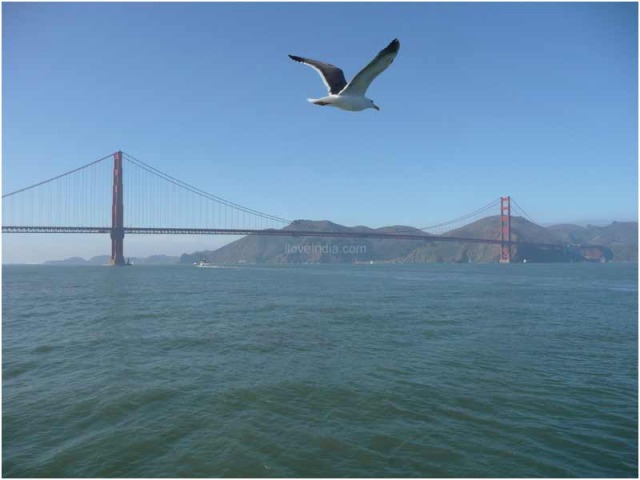
I had booked a redeye flight back from San Francisco to Boston that last Saturday night.  For my last adventure, a large group of us - old friends and new - went out to a chic dinner in the Mission neighborhood.  Earlier that day, I'd been at Pier 39 overlooking San Francisco Bay, eating, drinking and reveling.  It was my last day and I was intent on savoring, if not imbibing every last drop of California sunshine.  At dinner around a large circular table, the cocktails and jokes went round.  I was having a lot of fun, but I was also somewhat aware that I had a flight to catch.  Though I knew I had to go, my sense of time was failing.  After much procrastination, I finally asked my friend sitting next to me what time I had to leave to make sure I caught my flight.  She asked to see my ticket and when I produced it, her eyes widened,  "NOW!"  she howled.

My heart raced as I duck-duck-goosed my way around the table, giving kisses and hugs.  I dashed to my friend's car to grab my suitcase as she hailed me a taxi.  I barked my instructions to the driver and soon realized I had zero cash in my wallet.  I asked the driver to stop at an ATM, putting further at risk the likelihood of making the flight.  The driver sensed my apprehension and when he asked what time my flight left, he found another gear in that taxi.  We weaved through traffic, pissed off innumerable drivers, and pulled up to the Delta gates with but moments spare.  This being the pre 9/11 era, I was able to quickly check my bags at the curb and make my way through security with relative speed.  I focused, albeit with great intoxication, on finding my gate.  And once I found the gate and made my way down the jetway to the plane, I called upon my few remaining senses to zone in on locating my assigned seat.  I had the kind of tunnel vision of a mind both self-conscious of being drunk while trying to appear sober.  I honed in on my seat, only vaguely aware that the plane was not especially full.

I fell down in my seat next to, if not partly on, a couple.  I am sure it wasn't graceful for I had exhausted the little gross motor control I had in just getting down the aisle.  I exhaled a mighty sigh of relief and couldn't help, I'm sure, but breathe vodka fumes on my neighbors.  I slurred to them as clearly as I could, "I'll probably be able to find another seat once we get going."  I said this to them forgetting that I was surely the last person to board and in that moment wholly unaware that we were literally about the only passengers on the plane.  As I finally took a half moment to scan the cabin and realize how odd it must have been for them to have a drunken 20-something year-old kid plop down nearly on top of them on an empty plane, I sheepishly offered, "Maybe I'll just move now."  They never said a word to me as I skulked away to an empty row in the rear of the plane.

To say I slept the first leg of the flight to Atlanta would be to imply I had some choice in the matter.  I was unconscious.  I passed out before the plane even took off and felt nothing of the landing either.  It was only when they turned on the cabin lights after we arrived at a complete stop at the gate that I realized we'd even left San Francisco.  I endured a pounding headache and the parched mouth of a desert dust storm on the flight leg to Boston.  My friend, Chris, picked me up and took me to the IHOP in Brighton.  From there we went to his apartment where I'd left my car.  It was a typical rainy April New England day.  The air was bone-chilling, the skies dark and depressing.  In other words, it was the perfect meteorological complement to both my mood and physical condition.


As I drove down Rt. 3 toward the Cape and cataloged the work that lay waiting for the remainder of my Sunday (term papers to read; lesson plans to finalize; chapters to read), my stomach began to knot.  It wasn't the hangover or IHOP that caused my innards to twist - and it wasn't the prospect of hours of schoolwork, either.  I drove through Weymouth, Hanover, Pembroke and Kingston, I began to clearly see the months ahead.  I saw a summer of fun in Wellfleet, free of the monotony of the school year.  I felt, viscerally, the ebb of that summer and the lack of enthusiasm I'd have for September's arrival.  I projected the undulating emotions of the academic year, saw the long hours wielding chalk and a red pen.  And I felt certain that when next April came, I'd head out to San Francisco.  I'd fill my vacation week with laughter and adventure.  I'd book a redeye flight home so that I'd maximize every possible minute of the vacation.  I'd arrive back in Boston on a cold and rainy day, get picked up by Chris, and we'd go to IHOP so I could wistfully regale him with the tales of my escapades.  And then I'd drive to South Yarmouth with a gnawing pit in my gut.  As I drove Capeward, somewhere between Plymouth and Barnstable, the light bulb went on.  

I arrived at 26 Arlington Street, South Yarmouth, Massachusetts by midday.  I unpacked my school work and dutifully fulfilled my teaching responsibilities.  Exhausted by nightfall, I turned in early and rose the next day before the sun.  When I met with my department head later that day, I solemnly told her that, no, I would not be renewing my contract; I would not be returning to teach there the next year.

I didn't know what I'd be doing next.  I now know that I couldn't have known it even if I thought I did.  All I knew then was that the pit in my gut was gone and I felt more happy not knowing then I'd ever felt being sure of what was to come.



Wednesday, August 18, 2010

The Wisdom in Water


Several months ago - perhaps even a year - Linda and I watched the movie Surfwise. "SURFWISE follows the odyssey of 85-year-old legendary surfer Dr. Dorian "Doc" Paskowitz, his wife Juliette, and their nine children—all of whom were home-schooled on the beaches of Southern California, Hawaii, Mexico and Israel; they surfed every day of their lives, and were forced to adhere to a strict diet and lifestyle by their passionate and demanding, health-conscious father."

Surfers and some fans of surfing know well the Paskowitz story, but beyond that cultural subset  few knew of Doc or his story.  But perhaps I should first begin with my surfing history - brief as it is.

Frequent Ring Writes readers know that it's only been in recent years that I've developed some coordinated control over my long limbs.  Not always gangly, but rarely nimble, I stuck to games that relied little on eye/hand coordination.  Year by year, sport by sport, I was weaned away from the more talented players.  Sports like soccer, basketball, baseball, and football (we had no program in our town) were played in gym and I was amongst the last player picked..  Hockey  - skating and holding a stick to hit a puck - represented something wholly unimaginable.  Other than a bicycle, things with wheels were downright laughable; I nearly killed myself in attempts at skateboarding, roller skating or blading.  I looked like Gerald Ford coming down a jetway.  I tried skiing and remarkably never busted a bone though I took falls a plenty from Aspen to the Alps.

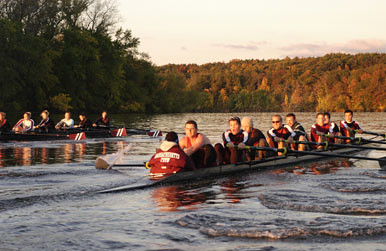
I soon learned that sports with repetitive movements were something that, with much practice, I could manage.  Bicycling, and running were two simple ones - one foot after the other.  I could even play a bit of golf (though never a great handicap) by grooving a swing that was serviceable.  In college I found crew and rowing to be the perfect complement to my skill set.  I sat on a seat, strapped my feet to a board, and simply inserted an oar into the water and pulled.  Over four years I honed my stroke, eventually making the 1st boat and winning a New England gold medal in our class.  And rowing gets us closer to water and closer to surfing.

It was through rowing that I became acquainted with Phi Mu Delta (PMD).  I joined the novice crew team and soon learned that several of the male rowers on the varsity team were in a fraternity.  I'd never thought that I'd want to be in a fraternity and didn't give it much thought at first.  I just wanted to be on the team.  I was an eager rower, if but a weak novice one.  I was so dedicated to the idea of making a go of it, that I convinced my novice coach to let me sleep at his rooming house over winter break so I could participate in the workouts.  (Deep down I think I also knew there was not a chance I'd perform them as well at home over a month long holiday break).   Living at the house, I grew to know the other roomers.  I soon found out I was living in an alumni crew house.  A couple of the boarders, though much older than I were still finishing their undergraduate degrees, others were taking grad courses.  There were former rowers, both from the men's and women's teams.  Though I was just a few months into my rowing career, I quickly absorbed much about UMass Crew in those few weeks.

One evening, two of the house dwellers, Jill and Michele - who rowed together on the women's team, invited me to drive up to L.L.Bean in Freeport, ME with two friend of theirs, Larry and Josh.  It was late, but Bean is open 24 hours and no one had classes or had to work the next day.  Jill had a behemoth of a station wagon and the five of us piled in and drove through the dead of a cold winter night to Freeport.  We drank beer and laughed most of the way and arrived at L.L. Bean at 2am.  We wandered the empty aisles, sat in display canoes, and even bought a few things.  Jill said she had a friend in Portland on whose floor we could crash.  We took many turns that Jill was guessing at which led us to a house she said she thought  was her friend's.  I am about 6'3; Josh and Larry are both taller and more solid.  The five of us tiptoed loudly into the living room.  Giant Josh laid claim to the couch and the rest of us huddled on chairs and on the floor.

In the morning, I heard people whispering, people I didn't know.  "Who is this?" the voiced inquired.  In a hungover haze, I became aware that these people were stepping lightly through and around us.  I felt sure we were in some stranger's house.  Finally, a person said, "I think that's Jill."  Relieved but still disheveled and embarrassed we demurely left and returned to Amherst.  Jill piloted the big station wagon to the other side of campus from where I lived and pulled behind a large boarding house on N. Pleasant Street that had Greek letters on the front.  The house was neither impressive or inviting.  It looked simply like a beat up boarding house.  From the car, I could see thick plastic covering the windows to keep the January cold out.  We said our goodbyes and Jill, Michele, and I returned to coach's house.  On the way back, I asked what the house was.  Michele and Jill both knowingly chuckled and answered, "It's the Mu."

I didn't know that much about The Mu, but soon learned that my coach was a brother at Phi Mu Delta and so was the lightweight coach.  I learned that nearly a couple of dozen current and former rowers that I knew were Phi Mu Delta's, some proudly and others less overtly.  I also learned there were plenty who were not.  That spring semester, I returned to my dorm, regular classes and continued to train with the crew team.  I was buried somewhere in the 2nd or 3rd novice boat, but still saw Josh and Larry among the rest of our teammates in the gym.  It was not long into the semester that I got a call in my dorm room from Josh.  He wanted to know if I was "interested in coming by the house sometime and meeting the guys."  I declined, politely saying that I wasn't really interested in fraternities.  But Josh is charming and persistent.  And standing several inches taller and weighing many muscular pounds more than me, he's an effective salesman.

He and Larry both, along with a few other PMD rowers made other entreaties.  Finally Josh told me just to come by for "an Exchange."  He explained that it was a small party, usually on Thursday nights in which a different sorority or two came over and we drank beer.  Josh said, "You like girls and beer, don't you? Come on."  Not wanting to go alone I convinced my closest novice rower friend, Russell, to come with me.  The details of my Phi Mu Delta experience are too numerous and at times too embarrassing to delve into here.  The summary is that I pledged that fraternity (as did Russell) and ended up living in the house for the remainder of my three years in college, rowing for the crew team all the while.   But what about surfing?  What about the ocean?  Yes, yes.  I will come to that.

Growing up in landlocked Mansfield, Connecticut, over an hour's drive to the beach, it was a special occasion when we went.  We'd drive to Ocean Beach Park in New London or Rocky Neck in Niantic, but soon we drifted eastward until Watch Hill, Misquamicut, and East Beach became the favorites.  It was out in Rhode Island where you were more likely to find bigger waves.  Though I'd proven myself able to tread water, I wasn't a natural swimmer.  It also so happens that my mother has always been quite protective.  The rule was that I wasn't to go out in water above my armpits. I did some body surfing, jumped around a bit, but when the waves got big, I was relegated to the shallows or the beach.  Sure, I sometimes went out over my head, but I had taken enough underwater tumbles in the rolling surf to know that I wasn't going to tempt the wrath of Poseidon.

While we day tripped to RI from time to time, it was summers that we, along with the masses, drove to Cape Cod for extended vacations.  When I was little we went to Craigville, and even into my early teens we often spent a week or so there.  We also had friends in Eastham and as a preteen (was I ever a tween?) that was the first time I can recall being cognitively aware of the Lower Cape.  We spent many days along bayside sandy beaches.  On clear days you could see the relic that was the Target Ship and sometimes all the way up to the Monument in Provincetown.  Our friends would take us sailing, fishing, and clam-digging.  We boated out to islands that disappeared when the tide came up.  On the ocean side, the water was colder and often there was more surf.  We'd go to beaches up and down the National Seashore - From Nauset in Orleans, up to Nauset Light in Eastham, Marconi in Wellfleet - and every Hollow beach along Cape Cod's forearm from Wellfleet to Truro to P'town.  Our beach visits were so precious that I can remember my sister and I huddled under a blanket on a rainy day as our mom pointed to a light patch of sky saying hopefully, "I think it's clearing!"

In my youth, I might have seen a surfer or two from those beaches.  I now know for certain they were there. But surfing to me then - standing on an unstable board floating on fast flowing waves that were, by definition, going to break - was beyond my mind's projection.  Like skateboarding and the then unknown to me snowboarding, I didn't need any "sport" to challenge my ability to stay upright.  Still, I learned to love the water and as I grew older and into a more confident swimmer, I swam out over my head, let big waves lift me up, and survived the times heavy water pinned me below the surface so long that I wasn't sure which way was up.  When I got scared, I took a break but always braved the waves again.  But I never surfed, knew little of it beyond goofy surf movies or Beach Boys songs.

What I didn't know as a young boy on the Lower Cape in the 1970s was that in late 1980s I'd be living in a fraternity with several guys who spent their summers and between semesters living, working, and playing there.  Beginning the first summer after college, I would make regular trips to the Cape to visit my friends.  Wellfleet was where they went and often that's where I could be found.  My friends worked at the Beachcomber, for the town, at the general store, and for the trash company.  I heard many outrageous stories of parties, girls, fights, thefts, garbage finds, and bonfires.  From what I saw on my weekend visits, I had no reason to suspect any of it as hyperbole.   After college I continued to make trips to the Lower Cape. Sometimes I'd go with family, other times with, or to see friends.  Though up to that point I'd never spent any more than a couple of weeks there, I began to feel comfortable in Wellfleet.  I began to recognize the same people - friends of my friends, people who'd spent the entire summer of their lives there.  And through my friends, I made new friends.  And yet throughout that time I still never surfed.

Flash forward to the mid 1990's.  I'm halfway through my two year graduate degree at UMass - Amherst.  I have the summer off and Steve successfully pitches the idea of me working in Wellfleet for the summer and living with him in what we call the "Suck Shacks" behind our friend Luke's family restaurant in S. Wellfleet.  The Suck Shacks consisted of 5 small cottages.  Some had two bedrooms, others were studios. Each shack was tiny and featured two-burner stinkolaters (sink, stove, refrigerator units).  Having never lived in Wellfleet for a full summer I jumped at the chance.  Our stinkolater was named The Diavlo 5000.

I got two jobs - as a waiter at a pricey Wellfleet restaurant and as a beach officer for the town.  As a waiter, I had to be at work by late afternoon and was done around 12am.  I reported to the beach at 830am.  My job as the assistant manager was to help assign sticker checkers to beach and pond parking lots, give breaks to the staff, and then spend the rest of the time driving around Wellfleet, issuing tickets to illegally parked or unstickered cars.  I was deputized and carried a badge.  And it was during this summer, 1995, that I finally learned about surfing.

Steve was - and still is - an avid surfer.  Though he grew up in Boston, he discovered surfing on the Cape and like so many was immediately hooked.  Our friend Luke (went to UMass, was a PMD, and whose parents owned the Suck Shacks) spent most of the summers of his youth (and still does) in Wellfleet.  Though Luke spent the school year in Foxboro on his skateboard, he spent the summers on the Cape on his surfboard.  By the time I rolled into Wellfleet in 1995, Steve and Luke had both been surfing for years and had already begun their ongoing efforts to surf all over the world.  (Luke is also an accomplished photographer and much of his work features surfing:  www.lukesimpson.com).
Courtesy of lukesimpson.com

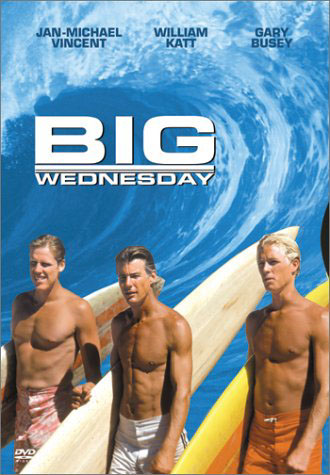
Between Luke and Steve there were surfboards all over and in the Suck Shacks.  They were piled on roof racks, hanging in the rafters, leaning against walls - both in and outside.  From them (and other surfer friends of theirs who became friends of mine) I learned about the different boards, what the shapes and sizes were good for.  For years prior Steve had drilled quotes from Endless Summer and Big Wednesday into my head.  But now I was watching obscure surf videos, in Luke's Suck Shack, drunk at 2am.  The next morning, bleary eyed, Luke and/or Steve would wake at dawn to check the surf, the wind.  Sometimes I'd go with them and survey the waves.  "Blown out." "Choppy." Nice lines."  Rippin'".  I began to absorb the language.  Slowly I was being drawn in.  What was it about surfing that could consume my friends so?  Sometimes they'd try to explain it to me, but were rendered speechless only saying that it was too hard to put into words.


Other than playing on a board in small "long board" waves, I had yet to try it myself until that summer.  Steve piled a few boards on top of his ancient station wagon and we drove to the beach.  The waves were small but ridable.  I pulled on a borrowed and very tight-fitting 3/2 wetsuit and Steve handed me an insanely heavy longboard.  It could have kept King Kong afloat.  It was a good board for me to learn on.  The waves weren't so big that I couldn't paddle past them, but big enough for me to paddle into them (a condition I later required for any surfing excursion).  Eventually, I worked my way through the progression of going from my chest to my knees to my feet and then even popping from chest to feet (I bet it didn't look like I popped up, but I felt like I did). After many tries, I finally managed to catch a long ride into the beach. It was fun, and thrilling and I felt a sense of pride in the accomplishment.  Many life-long surfers begin this same way - one ride.  I am not one of those people.

Encouraged by my modest success, I continued to tag along with the surfers from time to time. I held no allusion that I was a natural or that I could begin to even approximate their skill, but I enjoyed it just the same.  I borrowed a board and a suit and managed a couple of other small surfing successes.  But when the waves got big, I got pummeled.  The water rose so quickly and crashed with such ferocity that I spent as much time drinking water as I did paddling through it.  My efforts to stand resulted in swift and impromptu dismounts.  I hung nothing.

Though I'd occasionally try my hand, a serious surfer I would not be.  Still having tried it, having caught a few waves, I did have an inkling of how addictive it could be.  I sensed the oneness with the water that riding a wave offered.  I saw the beach from the water, from well past the area where waves began to crest.  And having watched all those surf movies and having looked through all the surf magazines around the Suck Shack, I began to absorb some of what surfing meant to my friends.  And while I didn't achieve their surfing proficiency, I did come to imbibe the purity which it represents.

So back to this movie, Surfwise, which we watched a while back, but upon which I still regularly reflect.  The story is about this successful doctor who grows so unhappy in his professional life that he decides to chuck it all and live life to its fullest - in his small camper with his wife, his 9 kids, and their surfboards. I won't attempt to sum up the experience - leave that to the documentarians - but certainly Doc developed a philosophy to which he both fiercely subscribed and one which he also enforced in his family - not always to their liking.  Through all Paskowitz's experiences, he honed a life philosophy, summed it up in five elements:  A balance of Diet, Exercise, Rest, Recreation, and Attitudes of Mind.

The Paskowitz Family
Unlike Doc and instead of being surrounded by beaches and waves, I am, these days, mostly surrounded by lush green fields and dense woods.  And yet, like Paskowitz, I, too, endeavor to find balance between diet, exercise, rest, recreation, and attitudes of mind.  And like Paskowitz being near and in the water helps.  In the 15 years since that first Suck Shack summer I've managed to sneak in a Wellfleet weekend or two most summers.  And because I've made many friends there, I still see familiar faces.  Steve still lives there and so does Luke.  There are still boards atop their cars.

Last weekend I spent three days in Wellfleet with my wife and my son, staying with friends.  And this time I went to a beach that I'd driven past for decades, but never been to.  It's Mayo Beach - just down the road from the Wellfleet Pier.  It's a bayside cove and the waves don't get very big - perfect for my toddler son.  He splashed in the water while I stared at the dunes.  Toddlers can be bears and devils.  "No" is Max's favorite word.  Life - with or without a toddler - can be busy, stressful, and frustrating.  Finding time for a balance between "diet, exercise, rest, recreation, and attitudes of mind. isn't a simple task.  Wellfleet helps, wherever your "Wellfleet" happens to be.

One day we were driving down a windy dirt and scrub pine road.  The side view mirror was clipping branches as we followed Jack and Inga's car down the a narrow and wooded fire road.  Further and further we drove.  Surely we were on private property, surely we were lost.  On a piece of land barely a few miles wide surely we would run out of road.  And we did.  Late, late in the afternoon, we arrived at a hidden dune cul-de-sac.  We couldn't see the beach from where we parked.  We couldn't even hear the waves beyond the dune and above the sound of the strong breeze.  We followed a steep path through the grassy dunes, passing a few people as they were leaving.  When after a few minutes, we finally crested the last hill, an empty expanse of beach revealed itself to us.  Here, in Wellfleet, in the middle of a hot and sunny August weekend was an empty beach, no one as far as we could see in either direction.  It was ours.  It was equal parts diet, exercise, rest, recreation and attitudes of mind.  I didn't surf, but I was riding the wave.


Surfwise Trailer

Tuesday, June 29, 2010

Stillness

There's a lot of noise out there.  And there's a lot of noise in your head.

I grew up in a mostly rural pocket of northeastern Connecticut.  Save for being the home of the state's university, Mansfield was - and is still - a quiet town.  With the UConn skating rink and Student Union arcade room, a drive-in theater, and not much else, I was accustomed to finding ways of passing the hours.  I explored the woods looking for trails, I attempted to go fishing, I enjoyed sledding down pristine white hills.  Though there were many who chose to stay, I, like a lot of kids - many also the children of professional academics - sought to get away just as soon as we could.

Though college only took me to another college cow-town, Amherst, Massachusetts, it was big school in an area with several other colleges within a 20 minute radius.  I met hundreds of new people, joined the crew team and was exposed to a whole different set of experiences.  I fell under the spell of a fraternity, joining their ranks and living in our fetid house for three solid years of college.  There was a buzz and an energy and as a 20 year-old who wanted to be buzzed and energized there was no better place.  With the exception of the time I broke my humerus bone in half and got 10 stitches in my other hand (lumber yard accident, different story) and lived back home for a few weeks recuperation, I flew the coop right after high school.

Moving to a Boston suburb and then into the city after college, I have mostly lived in urban or suburban places ever since.  And as I moved into more compact and complex environments, my own world got more complex.  I had a job now, had to make my own decisions and sometimes suffer the consequences.   In my early twenties, I, like many, made - let's see, to put it politely - questionable decisions.  Many times given the choice between industriousness and indolence I chose the latter.  The party instead of the library, the girl instead of the gym.

A few years later, I advanced in my place of employment.  At first it wasn't really any kind of effort.  I was likable, reasonably intelligent, and mostly kind.  It wasn't long, however, that things got more complex.  If I was still going to be in the company's good favor - and just as importantly if I wanted to boost my pay, I had to take on more responsibility.  More responsibility requires more effort, more training, more curiosity and diligence.  Sure I'd made periodic efforts in my classes.  Sometimes I had to put in maximum effort to get passing grades in particularly difficult courses.  I often employed determination and resolve as an oarsman in college.  In crew I had to learn from my teammates and my coaches how to put forth consistent effort.  And in that sport my failure was my teammates' failure; I felt responsible to them.

Responsibility.  I have no idea how I came to possess any semblance of it.  When I was in high school I worked at the Mansfield Depot Restaurant.  I began as a dishwasher.  I showed up on time, I did my job thoroughly and conscientiously.  If someone called in sick and they called me, I went in.  If they needed someone to work a double, I offered.  Certainly, I was motivated by money.  Though I made less than $4/hr. when I started, those paychecks supplied all my spending money.  I saved up and with some help from my dad, bought my first car (1974 Volvo 164E, with a jerky transmission).  But not far  below money, I didn't want my bosses to think poorly of me.  I felt rewarded by how thankful they were that I was able to work and was a diligent employee.  I should have said "no" more than I did.  I should have spent a little bit of time being still while I could.

When I was in my early 30s, I moved abroad.  It had been a goal of mine; it appeared to be  the next adventure I was craving.  In my several years of city hopping, I lived in London, Amsterdam, Toronto, and Zurich - and that was only where I got my mail.  I was using my work postings to go to Italy or Luxembourg, France, Scandinavia, India, Uzbekistan, Kazakhstan, Poland, and Malta of all places.  Though I travelled more than some, there were others I worked with who hadn't missed a continent and had seemingly alighted in every country on them.  They lived out of their suitcases, had wallets stuffed with reimbursable receipts, and knew every Irish bar in every non-Irish city they'd seen.   I relished the travel, the relative perks, and the opportunity to learn more about myself by seeing myself in different settings.

Year by year, the adventure continued until I moved back to Boston.  It was shortly after 9/11 and our country was a different place than the one that had launched me in the 1990s.  After the 2000 Election, when Bush 'beat' Gore, it was all and more than we might have anticipated.  The country moved right, and became even more partisan.  Bush made extraordinary gaffes, both publicly and politically. But it was funny still.  The Daily Show and Will Ferrell can thank Dubya (and a lot of talent, too) for much of their success today.  But after 9/11 things got pretty serious.  War.  Terrorists, Global Warming, global political unrest, loose nukes!  This was my 30s.

Eventually, traveling began to lose its luster and I had to make different kinds of choices.  I chose between a salary and a lifestyle.  I tried to strike a balance between what I wanted to do and what people wanted me to do.  I'd begun to save for my future.  I took time to consider.  I got my own financial planner.  The more I tried to reconcile what the heck I was doing with my life, I tried to think about what was meaningful to me.  My family.  My friends.  That was about it.  I was traipsing around the globe, but had so much time to myself that I had ample time to reflect.  I reflected on what was worthwhile.  Socializing was valuable, but I grew weary of the repetition.  On many quiet Sunday afternoons, I'd wander foreign city streets.  I was able to meet up with friends, but I also enjoyed the stillness of being alone in a park, by a river, on a trail.

Stillness.  That was the word that my stream of consciousness lingered on.  It's the word that inspired this posting.  I was enjoying a hot shower after a peaceful run.  Both of those things offer stillness, if one permits it to enter you.  Sometimes it's an effort, but other times it is spontaneous.  In the shower, you feel the warm water beat on your skin, cooling and warming at the same time.  You get to give yourself and all over body massage (if you're cleaning all the parts you ought to).  In the shower, behind the closed door, you're away from the TV, the kids, the internet and the iPhone.  Sure you can have a radio, but that would ruin the stillness, the privacy of the moment.  I many wives complain about the length of time their husbands spend in the bathroom doing number two.  It's the stillness.  Whether in the corporate bathroom stall, or the downstairs loo under the stairs, many a man takes respite from all that consumes him outside that door.  Take 10, deep, deep breaths, and you'll feel the stillness seep into you.  Calgon, take me away!

I don't know how many millions the makers of Ambien are raking in, but I do know that they are banking on people's inability to find and possess stillness.  And in that vein, alcohol, recreational drugs, including cigarettes, are mechanisms whereby many find that confounded, illusive stillness.  On the healthier side, many find stillness in yoga, pilates, and various forms of martial arts.  When I lived in New York City for an unemployed time, I had a lot of time to walk the island of Manhattan.  I'd walk 100 blocks at a time, at all hours of the day and night.  For the millions who've done this in any world class city around the globe, you know what it is to be struck by the sheer magnitude of the operation.  All those people, all that transportation, infrastructure, food, trash!  It's 24/7 because it has to be, because it's alive, it breathes.  I am thankful for the time I lived in Manhattan because at that point in my life it taught me that I didn't want to live there. For me, it was too busy.  I literally became tired sometimes after just a short walk outside because I couldn't help but absorb how busy everyone else was.  I needed more stillness.  I am betting there's a lot of Ambien in Manhattan.

In between my second and final European tour of living and that stint in NYC, I disappeared for two months.  Long before Mark Sanford made it a popular alibi, I hiked a few hundred miles of the Appalachian Trail.  Along with a friend who'd often found the stillness he craved in nature, we hoofed it up and down hills and mountains.  We traversed large open fields, scaled rocks, swam in ravines, and spent hour after hour not saying a word.  It was exactly what I needed when I needed it.  Before that hike, I was living in Zurich and planning on moving to Lucerne soon after the summer.  The company package offered wasn't quite what I was expecting and the company was not going to offer more.  We were at an impasse.  It was not the first time I had to make a decision about what was valuable to me, but it was one of those times where you ask yourself what your life means to you - and how valuable you feel to those you work for.  It was a watershed moment for me because it allowed me the opportunity to be true to myself.

I thanked them for the many opportunities I'd been given and gave my notice.  In the process of coming to that decision I spoke with many confidants.  As I'd done many times before and would do many times again, I used those discussions to comb through the complexity of emotions that accompany a major life decision.  As I explained the situation to people in both monetary terms and at what juncture in my life this occured, I began to understand that I'd reached as far as I wanted to go with the company.  I didn't want anyone else's job who was superior.  As I interpreted it then, to me those people were pawns of the company.  If you were talented and completely dedicated to the company, you were 'rewarded' by moving to ten cities in ten years.  Or maybe your whole family would have to move from Boston to China, no matter that it's your daugther's senior year in high school.  I didn't want to be a cog, however highly paid that cog was.

I knew that even though I knew I could earn more money, I also knew that you either have to be very intelligent or very hard working or both - and even if you are you have to catch some luck, too.  Whatever the psychological reasons (and I'm sure they are deep and plentiful), it wasn't enough to make me want to supplant my independence for the sake of the company.  I'd gotten what I perceived was valuable out of the relationship.  I was paid well enough, I got to travel, I had friends all over the world and a global perspective that I continue to carry with me every day.  But the wave had crested and I didn't want to be pulled down into the undertow.

Sadly, many of you - and certainly people you know  - are churning in the undertow and looking to come up for air.  To breathe.  To find stillness.  It happens imperceptibly slowly.  It's easy to see the second hand on a clock move.  If you stare carefully, you can see a minute hand move.  But staring at an hour hand will make you insane.  And yet, time passes.  Before you realize it, you bought a house.  You got married.  Your kids are almost in, what the F!, middle school!  And for too many, you're stuck in a job, town, marriage, relationship, bad habit that you've been in for years.  We find moments of stillness.  For the fortunate among us hard work leads to vacation and that sunrise on the lake from the deck.  A few bottles of wine will stop the mental carousel for an evening.  Otherwise, it's very hard to stop the noise.  Every question leads to another question and another person perhaps to involve, and a cost consideration, and maybe someone's feelings to think about.  With the increase in electronic communication, the immediacy of the times in which we live, presents the need of simply removing yourself from being accessible.  We now have the burden of being concerned that if you don't answer a text message in a 'reasonable' amount of time, you're perceived either as an idiot for not having your apparatus with you or as one intentionally avoiding communication.  And if you are having an affair, it means you are b-u-s-t-e-d.

My path required that I have a crises of personal conscious and leave the job that wasn't filling my soul anymore.  I ditched my laptop and mobile phone and took to the Appalachian Trail.  And while there was stillness and I had many pure and perfectly still moments, I had long, long conversations with myself, too.  What was I going to do when I came out of the woods?  Where was I going to live?  Who was going to be my life partner, the ballast for which I was so obviously yearning?

My romantic arc - rated PG - in brief.  I didn't have a real girlfriend until college.  In high school, I barely kissed a girl outside of whatever spin the bottle game I was fortunate in which to land a seat.  College was different.  In college I wasn't the person everybody already knew.  And girls were different.  They appreciated different things.  For years being funny meant getting laughs.  In college and beyond being funny meant you got to occasionally kiss the girl.  This was new to me and after finally experiencing it for myself it was hard for me to just want to kiss one girl.  So I kissed a few, had some major crushes, picked up girls, and got dumped by girls.  My dad's been married at least as many times as Franklin D. Roosevelt was elected president and I used to say - and I think I believed  - that I didn't want to get married before I was ready to stay married.  I met some fantastic women, smart, beautiful, funny, athletic, driven, compassionate, worldly and then there were a few who weren't any of those things.  I was looking for the perfect woman for me and as searchers know the longer it takes the harder it becomes.

It was a void I was looking to fill.  And as much luck as I've ever had led Linda Mary LoPiccolo into my life.  As they say in life and in cliché, all the others were merely prelude to this.  When we finally engaged out in Long Beach, California where we lived in August of 2003, I'd chosen for the first time the kind of permanent commitment that had long eluded me.  It was the first time this selfish Sagittarius elected to be responsible for something other than himself.  It took me longer than it ought to have to realize it, but I fell in love with Linda and thankfully she with me.  I guess I am a slow learner because it's obvious to me now how perfect she is.  Not perfect.  Perfect for me.  But I digress.

There was this moment right after our wedding that I often return to.  After the reception and after stopping at the bar where our rowdy friends and repaired to, Linda and I got in the back of a somewhat tacky limo for our ride from Connecticut to our Boston hotel.  (We departed to Mexico the next morning.  I recommend Hotel Secreto).  It was the first time we were alone in several days.  Those days preceding the wedding are hectic.  There's family coming in, last minute arrangements, weather to watch, and of course, fun to be had.  With the wedding and our all our guests behind us, we could breathe.  We had stillness and the beauty of it, what was magical was that it was shared.  I looked into Linda's eyes and she into mine and in that moment we were perfectly aligned (horizontally, too).  It was a moment of stillness and perfection to which I regularly return.

But like that hour hand on a clock, time passes and it's hard to tell how it did, so quickly.  You think about all that's happened in that span of time, but looking back months get condensed into a nugget of experience.  When Linda and I were going through fertility treatments it went on for more than a year.  And then the whole process of considering and then moving forward with adoption is collapsed into a sentence when really that was probably a year, too. And whether you have your own baby or adopt one, you know what happens after it arrives.  And for those that don't have kids, you can imagine!  Time flies and the 'noise' is as loud as it's ever been.  Not just the noise of the kid, which is real to be sure, but now you've got a spouse, a child or two, or three or seven.  The dogs need to be walked and taken to the vet.  There's the dance recital, your sick parent, the hockey practice, the potential new position, GLOBAL ECONOMIC MELTDOWN!  That's not what we were prepping for.  As you get older you realize the calamities of youth were but love taps compared to the punches life has in store for you now.

So much noise. A lot of political noise - everyone's pissed off.  They're pissed at their government and they're pissed at the opposition.  They're pissed at big business and they're pissed at corruption.  Sarah Palin's pissed off, Glen Beck's pissed off.  Keith Olberman's pissed off.  John McCain looks pissed off even when he's happy.  If you're at all tuned in, you can't miss the rancor - it's on the radio, the web and on billboards.  I was running around my sister's neighborhood in Texas and many houses had these "No Socialism" placards stuck on their front lawns.  I get freedom of speech, am 100% for it, but just because you can say something doesn't mean you should.  But hey, it's a free country.  I digress again.  And it's easy to do because there are a lot of things in this life that are truly distracting.

Television is pretty noisy too.  Many of these reality shows capitalize on conflict.  If someone's not pissed off, they better be obviously peeved.  How much louder are the commercials than the show?  I know I am not alone in muting them.  Mute.  Silent.  Still.  Breathe.  I used to listen to my iPod (which I still sometimes call a Walkman) a lot when I was running.  In the cities I used it to disappear into the music and into the rhythm of my stride.  I also liked drowning out the sound of my heavy breathing.  It's not attractive.  But as I got fitter and especially when I ran on quieter routes, I left the iPod at home and chose instead to absorb my environment completely.  I smelled the foliage, heard the rippling brook, the chirping birds.  When I lived closer to a pool and swam laps, I found stillness in the repetition.  I find that stillness sometimes when I'm doing dishes or ironing (yes I do both).

As much as I praise stillness, I cannot help now but hear the word still and associate it with stillborn - and that is what Leo what was.  Born still at eight months.  Years after fertility treatments failed and after adoption succeeded we got pregnant.  That event, too, now is reduced to a sentence.  Something years in the making, so much emotional energy invested, so much noise endured, even embraced at times, gets relegated to a sentence.  We got pregnant.  On our own.  Leo brought us tremendous joy while Linda's pregnancy progressed normally and without warning.  It was a warm July day, 4 weeks before the due date when we learned that the baby had died.  This was the kind of stillness I never sought, never truly considered, and the one that also necessitates the stillness I now perpetually crave.  After Leo died, after three long days in the hospital, and after we went to the funeral home to collect his ashes, Linda and I paused as best we could.  Our son Max needed and deserved our attention and he got it.  But we couldn't breathe and we needed to.  We left Max with relatives and went north, to Maine to a cabin retreat belonging to that hiking friend of mine.  Those days nestled in the thick woods, next to that long lake were a gift.  I went for a few jogs.  Linda read.  We swam and we napped.  And there were tears. We had coffee at sunrise with the water lapping on shores. Then we left.

2009 was especially noisy.  The economy tanked, the housing bubble burst, and Obama replaced 8 years of Bush.  I was unemployed and we'd made the decision to walk away from our upside down city condo.  We lost the baby we longed to raise, suddenly, tragically.  And through it all, Linda and I were making choices that compelled us to listen to our values.  I don't want to spend two hours commuting every work day.  I don't think working that hard is worth either commuting or paying through the nose to live closer.  It just makes things noisier.  Let me make sure that readers know that I am speaking only for myself.  Millions choose to commute or feel that what they get for their hard work is worth that equation.  That's fine if it's fine for you.  It wasn't for me and we chose to move to the Quiet Corner - what the northeastern part of the state of Connecticut is affectionately called.  Through all the noise, the message was steadily speaking.  Leo's stillness firmly repositioned stillness to the forefront of my thoughts.  I read some Deepak Chopra and Eckhart Tolle.  I took some wonderfully long and meditative runs in preparation for my first marathon.  I practiced tuning out the noise.  I practiced being present.

Please don't imagine me some Buddhist monk in constant meditation.  I am not.  Despite my green environs and dearth of neighbors, the world too easily penetrates, vibrates, reverberates.  Internet, cable television, radio have made access to noise nearly as abundant here as it was in my former urban life.  But proximity permits me easier entry into stillness.  There's a mile stretch of road that I either drive or run on nearly every day.  It's one of the few straight roads around and there's a canopy of ancient and tall trees that form a cathedral vaulted ceiling of branches.  This time of year the green is so new and lustrous.  Later those leaves will grow richly and deeply green, but now they are translucent; when the sun shines through them the vernal splendor is arresting.

You might imagine me trotting down that shady road, or going to the farmer's market for freshly picked vegetables and those are things I indeed do.  But my mind is still too noisy, too many misplaced thoughts pulling me from the present.  I've read that it's a good first step that I'm aware of these leanings, that to be conscious of my thoughts helps to bring me back to the present.  It's an effort, every waking moment is an effort.  I go through phases of wanting to work on presence and in choosing not to, procrastinating being present for goodness sake!  Recently though, I was in a bookstore and saw a book about Zen Buddhism, Buddhism Is Not What You Think.  I bought it because everything I've ever read - which is not a ton - about Buddhism appeals to me.  I bought it because I knew I would find it helpful to have a new reminder of what it is I am seeking to honor, to value.  It's not something mystical I'm after; it's not even something necessarily spiritual.  What I'm looking for is something practical, a way to be, stasis.  There's a more peaceful mind in me - and in you.

Friday, March 5, 2010

Below the Surface

Over the past couple of months I've been spending a lot of time on a feasibility study.  I'm assembling the costs associated with the complete renovation of the vacant farmhouse which belongs to my wife's family and analyzing those figures to see if we can actually afford to do it.  Despite its dilapidated appearance, the house is structurally very sound and ripe for restoration.  (I wrote more about the house here:  The Farm.)

The house was built circa 1926 and was last occupied in the 1980s.  After my in-laws moved from Texas to Connecticut in the late 1990s to take care of the family property much work was done on the house to prepare it for its eventual restoration.  The removal of copious amounts of asbestos in the cellar and a new roof were two expensive and necessary investments.  Additionally, much effort and time (and money) was spent gutting the house to its bare studs to prepare for eventual transformation.  And that is essentially the condition it's in today.

Our hope is that we can afford to renovate the house and transform it into a beautiful and hospitable bed & breakfast/inn.  In order to know if we can actually do that, we obviously need to know what it will cost.  So over the past month or so I've been working with a local and reputable contractor to begin the process of estimating the costs.  Every week it seems a new group of contractors comes by to survey the house and property.  We've met with builders, painters, electricians, masons, plumbers, HVAC people, and even a representative of the Connecticut Trust for Historic Preservation.

With each visitor comes a new line item in the budget.  But many of these professionals also have the irksome habit of raising issues which seem to precipitate other potential costs.  "What kind of septic system is here?" "What kind of water volume does the well generate?"  The answer is, "I don't know, but I bet it's going to cost us more money to find out."  There are costs we can estimate now, but several others are dependent on what we find underground.  Soil tests to determine leach and fill for the septic system await and with that information will come a new contractor estimate.  We might need an entirely new septic system and we might need new wells dug to generate enough water supply for the large house.   Like much in life, the important answers, the deeper meaning, the hidden truths are buried below the surface.

Once we have rough estimates for all the work required, we need to add in the costs to furnish the house, buy and install appliances, and do all the little things that are needed to actually open for business.  The list of costs is a long one and it's as yet unclear if the estimated projected revenue will be sufficient to cover them.  There are many months ahead of business planning, estimating, and securing funds (anyone win the lottery lately?!).  It will still be many months thereafter to actually complete the project.  One thing that is extremely heartening is that to a person, those who come into the house can't help but marvel.  They speak about the remarkable straightness of the house.  They comment on the unexpected good condition of the interior.  Few can mask their surprise at how much bigger the house is compared to its exterior appearance.

This is no small endeavor.  To say it's a big job is a gross understatement - the house is about 5,000 square feet not including the full size attic which might become another livable space.  There's a difficult decision to be made at each juncture and each one has a financial implication - a life implication - both for the short and long term.  I have the distinct feeling that when we get the estimates back from the contractors someone is going to have to pick my jaw up off the floor.  I once heard it said that a compromise is an agreement where neither party is happy and I can easily predict that there'll have to be more than a few trade-offs along the way if we're really going to be able to pull this off.

We're often reminded that life is not about the destination, but rather it's the journey that counts.  We humans are so eager to get to where we think we want to be, only to arrive there and soon be anxious to move forward again to some new goal or destination.  I know that there will come a time when we make great progress on this house and that I'll be focused on the next stage - there will always be something to do.  I must however be mindful that the urge to move forward is really an expression of the ego.  While I am aware that my motivation to tackle this project is my ego at work, I must also remember that life's real answers aren't in the future at all, but rather in the present and often just below the surface.  Dig.

Wednesday, February 3, 2010

"foresight may be vain"

But Mouse, you are not alone,
In proving foresight may be vain:
The best laid schemes of mice and men
Go often askew,
And leaves us nothing but grief and pain,
For promised joy!

Many modern clichés emanate from literary past.  We often hear the expression, "The best laid plans" - referring to plans gone awry, the pointlessness of expecting a particular result from a specific stratagem.  We employ the words as a verbal shrug of the shoulders, as if to say, "Oh well - what are you gonna do?" when an an idea fails to pan out.  The phrase comes from a line in a Robert Burns poem,  "To a Mouse."  (Burns, often referred to as Scotland's national poet, was born in 1759 and died 37 years later in 1796.  "To a Mouse" was written in 1785.)

We often put so much of ourselves into our future plans that when reality inevitably differs from our minds' eye we are left to, or at least given, to lament the present.  We lay the blame squarely on ourselves for the 'mistakes' we made in either creating or executing the plan.  Many of us shoulder the failing as if we could or should be able to accurately predict the future.  The lesson we fail to learn, heed or internalize is that despite our expectation to the contrary, we can't know what's going to happen and so can't rationally accept responsibility when the future differs from expectation. Yet we do this time and again.   We habitually beat ourselves up for what we perceive as a personal failing rather than an immutable law of nature.  Even a laboratory mouse learns how to avoid an electric shock after a few trials, but we humans seem unable to avoid this mental trap.  Fool me once, shame on you.  Fool me twice, shame on me.  Shame on us.

Admittedly, it's hard to live life without occasionally feeling the pain of disappointment.  But disappointment can only occur where expectations exist.  There are some who would argue that if you don't have any expectations you can't be disappointed.  They say that if you don't have your hopes up you can only be pleased by the unanticipated 'positive' result.  And while there's truth in that, it also seems a muted way to pass through life.  Indeed it is hope that makes us unique as mammals.  We can imagine the future; we can dream big; we can strive for things that might otherwise seem beyond reach.  Politicians thrive on hopes and dreams - and certainly we need them to.  JFK dreamed of the moon, while Reagan pledged to make America great again.  And Obama became president because he embodied hope and change - words that by definition allude to the future.  (Before you rail against any politicians campaign promises, remember that the best laid plans....)  Our difficult task is to live a meaningful life in which we understand the past, hope for the future and strive to have deep and abiding appreciation of the present.

In the last stanza of "To a Mouse" Burns writes that though the meager mouse has tribulations, it is the mouse who is actually blessed by living eternally in the present.  The author, and by extension we humans, tend to look backward, often regretting choices made, actions taken, ruminating on the unalterable past.  And if we're not living in the past, we're attempting to project a future we can't possibly know, too often with paralyzing angst and apprehension.  While we know we can't plan the future, we spend an inordinate amount of time doing just that, trying to make it just so.  The madness in replaying the past or projecting a unknown future is self-evident and part of the human condition - as Burns notes:

Still you are blest, compared with me!
The present only touches you:
But oh! I backward cast my eye,
On prospects dreary!
And forward, though I cannot see,
I guess and fear!

The lesson, of course, is to do your best to live in and value the present.  It really is all you ever have.  Everything else only exists in your mind.  The past is past and the future is future.  The present is now.  This moment.  Discontentment, disappointment, disillusionment can only arise when a comparison is being made between the present and past, between the present and future.  If one can truly dwell in the present, one finds there is only the now and the sense of peace and contentment that engenders the serenity we all crave - lasting happiness.  Most of us have at least momentarily experienced this in nature. It was the night you paused and reflected on how incredibly bright the stars were.  It was the vista you inhaled from a mountain top.  Others of you have been brought to this place by the arresting beauty of music, of a singer's impossibly powerful or soulful voice.  Athletes sometimes get there via a 'runners high." And in that moment of orgasm, you are most certainly not in the past or future.

I am not so naïve as to believe that this kind of zen equanimity is easily attained or maintained.  I just think it's worth our while to habitually make the effort.  The fact is you don't need to view or experience something seemingly magical or beautiful to benefit from the present  All one really needs to do is learn - and practice - how to turn your brain's attention away from the past or future.  Start small - take a closer look at the scenery, but don't think about it - just appreciate it.  Focus for a time on the sensations in your body.  Listen to your breathing, connect with your sense of touch.  Be aware of when your mind drifts to events past or a future not yet experienced and actively pull yourself back to the moment.  You won't be disappointed.
Burns Original Text


Wee, sleekit, cowrin, tim'rous beastie, 
O, what a panic's in thy breastie! 
Thou need na start awa sae hasty 
Wi bickering brattle! 
I wad be laith to rin an' chase thee, 
Wi' murdering pattle. 


I'm truly sorry man's dominion 
Has broken Nature's social union, 
An' justifies that ill opinion 
Which makes thee startle 
At me, thy poor, earth born companion 
An' fellow mortal!


I doubt na, whyles, but thou may thieve; 
What then? poor beastie, thou maun live! 
A daimen icker in a thrave 
'S a sma' request; 
I'll get a blessin wi' the lave, 
An' never miss't.


Thy wee-bit housie, too, in ruin! 
It's silly wa's the win's are strewin! 
An' naething, now, to big a new ane, 
O' foggage green! 
An' bleak December's win's ensuin, 
Baith snell an' keen! 


Thou saw the fields laid bare an' waste, 
An' weary winter comin fast, 
An' cozie here, beneath the blast, 
Thou thought to dwell, 
Till crash! the cruel coulter past 
Out thro' thy cell.


That wee bit heap o' leaves an' stibble, 
Has cost thee monie a weary nibble! 
Now thou's turned out, for a' thy trouble, 
But house or hald, 
To thole the winter's sleety dribble, 
An' cranreuch cauld.


But Mousie, thou art no thy lane, 
In proving foresight may be vain: 
The best laid schemes o' mice an' men 
Gang aft agley, 
An' lea'e us nought but grief an' pain, 
For promis'd joy!


Still thou are blest, compared wi' me! 
The present only toucheth thee: 
But och! I backward cast my e'e, 
On prospects drear! 
An' forward, tho' I canna see, 
I guess an' fear!


Standard English Translation


Small, sleek, cowering, timorous beast,
O, what a panic is in your breast!
You need not start away so hasty
With hurrying scamper!
I would be loath to run and chase you,
With murdering plough-staff.


I'm truly sorry man's dominion
Has broken Nature's social union,
And justifies that ill opinion
Which makes thee startle
At me, thy poor, earth born companion
And fellow mortal!


I doubt not, sometimes, but you may steal;
What then? Poor beast, you must live!
An odd ear in twenty-four sheaves
Is a small request;
I will get a blessing with what is left,
And never miss it.


Your small house, too, in ruin!
It's feeble walls the winds are scattering!
And nothing now, to build a new one,
Of coarse grass green!
And bleak December's winds coming,
Both bitter and keen!


You saw the fields laid bare and wasted,
And weary winter coming fast,
And cozy here, beneath the blast,
You thought to dwell,
Till crash! the cruel plough past
Out through your cell.


That small bit heap of leaves and stubble,
Has cost you many a weary nibble!
Now you are turned out, for all your trouble,
Without house or holding,
To endure the winter's sleety dribble,
And hoar-frost cold.


But Mouse, you are not alone,
In proving foresight may be vain:
The best laid schemes of mice and men
Go often askew,
And leaves us nothing but grief and pain,
For promised joy!


Still you are blest, compared with me!
The present only touches you:
But oh! I backward cast my eye,
On prospects dreary!
And forward, though I cannot see,
I guess and fear!