
Several months ago - perhaps even a year - Linda and I watched the movie Surfwise. "SURFWISE follows the odyssey of 85-year-old legendary surfer Dr. Dorian "Doc" Paskowitz, his wife Juliette, and their nine children—all of whom were home-schooled on the beaches of Southern California, Hawaii, Mexico and Israel; they surfed every day of their lives, and were forced to adhere to a strict diet and lifestyle by their passionate and demanding, health-conscious father."
Surfers and some fans of surfing know well the Paskowitz story, but beyond that cultural subset few knew of Doc or his story. But perhaps I should first begin with my surfing history - brief as it is.
Frequent Ring Writes readers know that it's only been in recent years that I've developed some coordinated control over my long limbs. Not always gangly, but rarely nimble, I stuck to games that relied little on eye/hand coordination. Year by year, sport by sport, I was weaned away from the more talented players. Sports like soccer, basketball, baseball, and football (we had no program in our town) were played in gym and I was amongst the last player picked.. Hockey - skating and holding a stick to hit a puck - represented something wholly unimaginable. Other than a bicycle, things with wheels were downright laughable; I nearly killed myself in attempts at skateboarding, roller skating or blading. I looked like Gerald Ford coming down a jetway. I tried skiing and remarkably never busted a bone though I took falls a plenty from Aspen to the Alps.

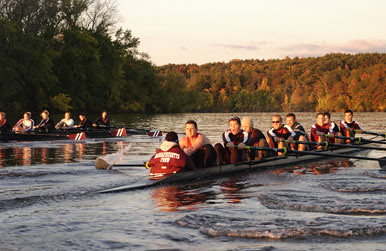
I soon learned that sports with repetitive movements were something that, with much practice, I could manage. Bicycling, and running were two simple ones - one foot after the other. I could even play a bit of golf (though never a great handicap) by grooving a swing that was serviceable. In college I found crew and rowing to be the perfect complement to my skill set. I sat on a seat, strapped my feet to a board, and simply inserted an oar into the water and pulled. Over four years I honed my stroke, eventually making the 1st boat and winning a New England gold medal in our class. And rowing gets us closer to water and closer to surfing.

It was through rowing that I became acquainted with Phi Mu Delta (PMD). I joined the novice crew team and soon learned that several of the male rowers on the varsity team were in a fraternity. I'd never thought that I'd want to be in a fraternity and didn't give it much thought at first. I just wanted to be on the team. I was an eager rower, if but a weak novice one. I was so dedicated to the idea of making a go of it, that I convinced my novice coach to let me sleep at his rooming house over winter break so I could participate in the workouts. (Deep down I think I also knew there was not a chance I'd perform them as well at home over a month long holiday break). Living at the house, I grew to know the other roomers. I soon found out I was living in an alumni crew house. A couple of the boarders, though much older than I were still finishing their undergraduate degrees, others were taking grad courses. There were former rowers, both from the men's and women's teams. Though I was just a few months into my rowing career, I quickly absorbed much about UMass Crew in those few weeks.
One evening, two of the house dwellers, Jill and Michele - who rowed together on the women's team, invited me to drive up to L.L.Bean in Freeport, ME with two friend of theirs, Larry and Josh. It was late, but Bean is open 24 hours and no one had classes or had to work the next day. Jill had a behemoth of a station wagon and the five of us piled in and drove through the dead of a cold winter night to Freeport. We drank beer and laughed most of the way and arrived at L.L. Bean at 2am. We wandered the empty aisles, sat in display canoes, and even bought a few things. Jill said she had a friend in Portland on whose floor we could crash. We took many turns that Jill was guessing at which led us to a house she said she thought was her friend's. I am about 6'3; Josh and Larry are both taller and more solid. The five of us tiptoed loudly into the living room. Giant Josh laid claim to the couch and the rest of us huddled on chairs and on the floor.

In the morning, I heard people whispering, people I didn't know. "Who is this?" the voiced inquired. In a hungover haze, I became aware that these people were stepping lightly through and around us. I felt sure we were in some stranger's house. Finally, a person said, "I think that's Jill." Relieved but still disheveled and embarrassed we demurely left and returned to Amherst. Jill piloted the big station wagon to the other side of campus from where I lived and pulled behind a large boarding house on N. Pleasant Street that had Greek letters on the front. The house was neither impressive or inviting. It looked simply like a beat up boarding house. From the car, I could see thick plastic covering the windows to keep the January cold out. We said our goodbyes and Jill, Michele, and I returned to coach's house. On the way back, I asked what the house was. Michele and Jill both knowingly chuckled and answered, "It's the Mu."
I didn't know that much about The Mu, but soon learned that my coach was a brother at Phi Mu Delta and so was the lightweight coach. I learned that nearly a couple of dozen current and former rowers that I knew were Phi Mu Delta's, some proudly and others less overtly. I also learned there were plenty who were not. That spring semester, I returned to my dorm, regular classes and continued to train with the crew team. I was buried somewhere in the 2nd or 3rd novice boat, but still saw Josh and Larry among the rest of our teammates in the gym. It was not long into the semester that I got a call in my dorm room from Josh. He wanted to know if I was "interested in coming by the house sometime and meeting the guys." I declined, politely saying that I wasn't really interested in fraternities. But Josh is charming and persistent. And standing several inches taller and weighing many muscular pounds more than me, he's an effective salesman.

He and Larry both, along with a few other PMD rowers made other entreaties. Finally Josh told me just to come by for "an Exchange." He explained that it was a small party, usually on Thursday nights in which a different sorority or two came over and we drank beer. Josh said, "You like girls and beer, don't you? Come on." Not wanting to go alone I convinced my closest novice rower friend, Russell, to come with me. The details of my Phi Mu Delta experience are too numerous and at times too embarrassing to delve into here. The summary is that I pledged that fraternity (as did Russell) and ended up living in the house for the remainder of my three years in college, rowing for the crew team all the while. But what about surfing? What about the ocean? Yes, yes. I will come to that.

Growing up in landlocked Mansfield, Connecticut, over an hour's drive to the beach, it was a special occasion when we went. We'd drive to Ocean Beach Park in New London or Rocky Neck in Niantic, but soon we drifted eastward until Watch Hill, Misquamicut, and East Beach became the favorites. It was out in Rhode Island where you were more likely to find bigger waves. Though I'd proven myself able to tread water, I wasn't a natural swimmer. It also so happens that my mother has always been quite protective. The rule was that I wasn't to go out in water above my armpits. I did some body surfing, jumped around a bit, but when the waves got big, I was relegated to the shallows or the beach. Sure, I sometimes went out over my head, but I had taken enough underwater tumbles in the rolling surf to know that I wasn't going to tempt the wrath of Poseidon.

While we day tripped to RI from time to time, it was summers that we, along with the masses, drove to Cape Cod for extended vacations. When I was little we went to Craigville, and even into my early teens we often spent a week or so there. We also had friends in Eastham and as a preteen (was I ever a tween?) that was the first time I can recall being cognitively aware of the Lower Cape. We spent many days along bayside sandy beaches. On clear days you could see the relic that was the Target Ship and sometimes all the way up to the Monument in Provincetown. Our friends would take us sailing, fishing, and clam-digging. We boated out to islands that disappeared when the tide came up. On the ocean side, the water was colder and often there was more surf. We'd go to beaches up and down the National Seashore - From Nauset in Orleans, up to Nauset Light in Eastham, Marconi in Wellfleet - and every Hollow beach along Cape Cod's forearm from Wellfleet to Truro to P'town. Our beach visits were so precious that I can remember my sister and I huddled under a blanket on a rainy day as our mom pointed to a light patch of sky saying hopefully, "I think it's clearing!"

In my youth, I might have seen a surfer or two from those beaches. I now know for certain they were there. But surfing to me then - standing on an unstable board floating on fast flowing waves that were, by definition, going to break - was beyond my mind's projection. Like skateboarding and the then unknown to me snowboarding, I didn't need any "sport" to challenge my ability to stay upright. Still, I learned to love the water and as I grew older and into a more confident swimmer, I swam out over my head, let big waves lift me up, and survived the times heavy water pinned me below the surface so long that I wasn't sure which way was up. When I got scared, I took a break but always braved the waves again. But I never surfed, knew little of it beyond goofy surf movies or Beach Boys songs.

What I didn't know as a young boy on the Lower Cape in the 1970s was that in late 1980s I'd be living in a fraternity with several guys who spent their summers and between semesters living, working, and playing there. Beginning the first summer after college, I would make regular trips to the Cape to visit my friends. Wellfleet was where they went and often that's where I could be found. My friends worked at the Beachcomber, for the town, at the general store, and for the trash company. I heard many outrageous stories of parties, girls, fights, thefts, garbage finds, and bonfires. From what I saw on my weekend visits, I had no reason to suspect any of it as hyperbole. After college I continued to make trips to the Lower Cape. Sometimes I'd go with family, other times with, or to see friends. Though up to that point I'd never spent any more than a couple of weeks there, I began to feel comfortable in Wellfleet. I began to recognize the same people - friends of my friends, people who'd spent the entire summer of their lives there. And through my friends, I made new friends. And yet throughout that time I still never surfed.

Flash forward to the mid 1990's. I'm halfway through my two year graduate degree at UMass - Amherst. I have the summer off and Steve successfully pitches the idea of me working in Wellfleet for the summer and living with him in what we call the "Suck Shacks" behind our friend Luke's family restaurant in S. Wellfleet. The Suck Shacks consisted of 5 small cottages. Some had two bedrooms, others were studios. Each shack was tiny and featured two-burner stinkolaters (sink, stove, refrigerator units). Having never lived in Wellfleet for a full summer I jumped at the chance. Our stinkolater was named The Diavlo 5000.
I got two jobs - as a waiter at a pricey Wellfleet restaurant and as a beach officer for the town. As a waiter, I had to be at work by late afternoon and was done around 12am. I reported to the beach at 830am. My job as the assistant manager was to help assign sticker checkers to beach and pond parking lots, give breaks to the staff, and then spend the rest of the time driving around Wellfleet, issuing tickets to illegally parked or unstickered cars. I was deputized and carried a badge. And it was during this summer, 1995, that I finally learned about surfing.
Steve was - and still is - an avid surfer. Though he grew up in Boston, he discovered surfing on the Cape and like so many was immediately hooked. Our friend Luke (went to UMass, was a PMD, and whose parents owned the Suck Shacks) spent most of the summers of his youth (and still does) in Wellfleet. Though Luke spent the school year in Foxboro on his skateboard, he spent the summers on the Cape on his surfboard. By the time I rolled into Wellfleet in 1995, Steve and Luke had both been surfing for years and had already begun their ongoing efforts to surf all over the world. (Luke is also an accomplished photographer and much of his work features surfing: www.lukesimpson.com).
 |
| Courtesy of lukesimpson.com |
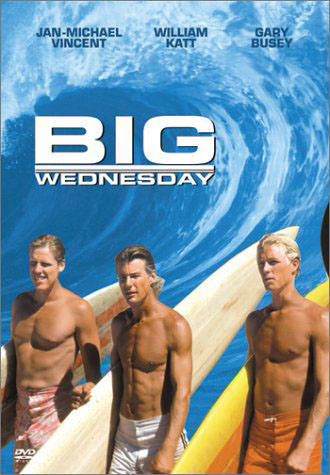
Between Luke and Steve there were surfboards all over and in the Suck Shacks. They were piled on roof racks, hanging in the rafters, leaning against walls - both in and outside. From them (and other surfer friends of theirs who became friends of mine) I learned about the different boards, what the shapes and sizes were good for. For years prior Steve had drilled quotes from Endless Summer and Big Wednesday into my head. But now I was watching obscure surf videos, in Luke's Suck Shack, drunk at 2am. The next morning, bleary eyed, Luke and/or Steve would wake at dawn to check the surf, the wind. Sometimes I'd go with them and survey the waves. "Blown out." "Choppy." Nice lines." Rippin'". I began to absorb the language. Slowly I was being drawn in. What was it about surfing that could consume my friends so? Sometimes they'd try to explain it to me, but were rendered speechless only saying that it was too hard to put into words.

Other than playing on a board in small "long board" waves, I had yet to try it myself until that summer. Steve piled a few boards on top of his ancient station wagon and we drove to the beach. The waves were small but ridable. I pulled on a borrowed and very tight-fitting 3/2 wetsuit and Steve handed me an insanely heavy longboard. It could have kept King Kong afloat. It was a good board for me to learn on. The waves weren't so big that I couldn't paddle past them, but big enough for me to paddle into them (a condition I later required for any surfing excursion). Eventually, I worked my way through the progression of going from my chest to my knees to my feet and then even popping from chest to feet (I bet it didn't look like I popped up, but I felt like I did). After many tries, I finally managed to catch a long ride into the beach. It was fun, and thrilling and I felt a sense of pride in the accomplishment. Many life-long surfers begin this same way - one ride. I am not one of those people.

Encouraged by my modest success, I continued to tag along with the surfers from time to time. I held no allusion that I was a natural or that I could begin to even approximate their skill, but I enjoyed it just the same. I borrowed a board and a suit and managed a couple of other small surfing successes. But when the waves got big, I got pummeled. The water rose so quickly and crashed with such ferocity that I spent as much time drinking water as I did paddling through it. My efforts to stand resulted in swift and impromptu dismounts. I hung nothing.
Though I'd occasionally try my hand, a serious surfer I would not be. Still having tried it, having caught a few waves, I did have an inkling of how addictive it could be. I sensed the oneness with the water that riding a wave offered. I saw the beach from the water, from well past the area where waves began to crest. And having watched all those surf movies and having looked through all the surf magazines around the Suck Shack, I began to absorb some of what surfing meant to my friends. And while I didn't achieve their surfing proficiency, I did come to imbibe the purity which it represents.
So back to this movie, Surfwise, which we watched a while back, but upon which I still regularly reflect. The story is about this successful doctor who grows so unhappy in his professional life that he decides to chuck it all and live life to its fullest - in his small camper with his wife, his 9 kids, and their surfboards. I won't attempt to sum up the experience - leave that to the documentarians - but certainly Doc developed a philosophy to which he both fiercely subscribed and one which he also enforced in his family - not always to their liking. Through all Paskowitz's experiences, he honed a life philosophy, summed it up in five elements: A balance of Diet, Exercise, Rest, Recreation, and Attitudes of Mind.
 |
| The Paskowitz Family |
Last weekend I spent three days in Wellfleet with my wife and my son, staying with friends. And this time I went to a beach that I'd driven past for decades, but never been to. It's Mayo Beach - just down the road from the Wellfleet Pier. It's a bayside cove and the waves don't get very big - perfect for my toddler son. He splashed in the water while I stared at the dunes. Toddlers can be bears and devils. "No" is Max's favorite word. Life - with or without a toddler - can be busy, stressful, and frustrating. Finding time for a balance between "diet, exercise, rest, recreation, and attitudes of mind. isn't a simple task. Wellfleet helps, wherever your "Wellfleet" happens to be.

One day we were driving down a windy dirt and scrub pine road. The side view mirror was clipping branches as we followed Jack and Inga's car down the a narrow and wooded fire road. Further and further we drove. Surely we were on private property, surely we were lost. On a piece of land barely a few miles wide surely we would run out of road. And we did. Late, late in the afternoon, we arrived at a hidden dune cul-de-sac. We couldn't see the beach from where we parked. We couldn't even hear the waves beyond the dune and above the sound of the strong breeze. We followed a steep path through the grassy dunes, passing a few people as they were leaving. When after a few minutes, we finally crested the last hill, an empty expanse of beach revealed itself to us. Here, in Wellfleet, in the middle of a hot and sunny August weekend was an empty beach, no one as far as we could see in either direction. It was ours. It was equal parts diet, exercise, rest, recreation and attitudes of mind. I didn't surf, but I was riding the wave.

Surfwise Trailer


